


RankmyAI wants to bring order to the AI chaos, interview with co-founder Jesse Weltevreden
Written by Imke Walenberg

The AI market is growing explosively. New tools appear daily, claims tumble over one another, and anyone trying to keep an overview quickly gets lost. It was precisely in that chaos that Jesse Weltevreden, Professor of Digital Commerce at the Amsterdam University of Applied Sciences, saw a clear societal mission.
With RankmyAI, he is building what has by now become the world’s largest independent AI tool database. Not driven by ads or affiliate deals, but by data, context, and transparency.
The idea for RankmyAI emerged at the end of 2022, when ChatGPT rapidly went mainstream. “In early 2023 I saw how fast that market was developing,” Weltevreden says. “Everyone was switching en masse to generative AI, and at the same time countless new tools were being added. I thought: this is going to get so big that it will no longer be manageable for anyone.”
As a market researcher, he saw a problem that went beyond information overload. “There was an enormous amount of hype. Everyone was saying something, experts were promising all sorts of things, but almost no one backed up their claims with numbers.” From the Amsterdam University of Applied Sciences, with a clear societal mission, he decided together with a small team to map the global AI market objectively.
No paid visibility, no hidden agenda
RankmyAI is fundamentally an AI tool directory, but radically different from the hundreds of similar platforms that already exist. “Virtually all those directories have a commercial interest,” says Weltevreden. “Tools pay for visibility or via affiliate constructions. Whoever pays the most ends up on top. That doesn’t give users an honest picture of what is truly relevant or popular.” RankmyAI deliberately refuses that route. Tools can sign up for free and never pay for ranking or visibility. “As soon as you charge tools money, you become dependent. And independence is exactly our core value.”
That choice has consequences, but also advantages. RankmyAI positions itself as a neutral source, where rankings are based on data rather than marketing budgets. The database now contains more than 58,000 AI tools and companies, ranging from well-known generative applications to highly specialized B2B solutions.
AI is much more than ChatGPT
An important goal of RankmyAI is to show how broadly AI is now being applied. “When people talk about AI, they often mean GenAI or even only ChatGPT,” says Weltevreden. “But that’s really only a small part of the story.” The platform includes use cases ranging from image and video generation to monitoring fish health in aquaculture, predicting logistics routes, analyzing farmland, developing medicines, or tracking the menstrual cycle. “For every use case you can think of, AI can help you today,” he states.
Especially in the B2B domain, a lot of innovation happens outside the public eye. Think of machine learning, computer vision, and predictive modeling. “These are not flashy consumer tools, but they have enormous impact on sectors such as logistics, energy, healthcare, and industry.”
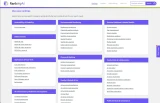
RankmyAI sits strategically between two worlds. On the one hand, commercial GenAI directories; on the other, large data companies such as PitchBook and Crunchbase, which focus on investment data and startups. “We try to bring those worlds together,” Weltevreden explains. “Both GenAI and ‘classic’ AI, both consumer and B2B tools.” That also makes the platform interesting for governments and knowledge institutions. Not tools, but ecosystems form the revenue model. RankmyAI maps AI ecosystems at a regional, national, or sectoral level. Clients include provinces, universities, industry associations, and international organizations.
For example, RankmyAI works with universities in Denmark and Norway, and runs projects for, among others, the United Nations in Latin America and a number of Dutch provinces. “They want to know: which AI companies are there, where are they located, how is that ecosystem developing? Those insights help with policy, innovation programs, and economic development.”

Digital hygiene
In addition to insight and inspiration, Weltevreden also sees a warning role for his platform. “Anyone who can connect an API can launch an AI tool in a day these days. That leads to thousands of tools that add little value, and sometimes even create risks.” He points to the phenomenon of copycats: tools that clone popular AI models, with misleading domain names and unclear ownership. “Users think they are working with an official tool, while their data ends up on unclear servers. That can create privacy and security risks.” Here too, RankmyAI sees a societal task: providing transparency and helping users make conscious choices.
Behind RankmyAI is a compact core team. Weltevreden himself is founder and CEO, co-founder Wilco Verdoold handles marketing, communication, and sales, and David Kakanis is responsible for data science and technology. In addition, the team works with students and researchers.
What is RankmyAI’s ambition? Keep growing, keep adding context, and above all keep adding nuance. “We don’t pretend to be complete,” says Weltevreden. “But we do want people to make better decisions, based on data instead of hype. In short, we want to bring order to the chaos.”
For marketers, it is difficult to see which AI tools are actually being used and deliver results for a specific use case. To provide that overview, Marketingfacts and RankmyAI are launching, from now on, a regular column that each time shows which AI tools are most popular within a concrete marketing use case, based on up-to-date data and market usage.
This article is an English translation of an earlier publication on Marketingfacts.
Other articles
-

Smart, Swift, and Secure: A Complete Guide to AI Real-Time Monitoring & Alerting Tools
-

Level Up Your Creations: How AI Game Development Tools Are Changing the Game
-

Smarter Safety: The Ultimate Guide to AI Risk Assessment & Management Tools
-

Level Up Your Decisions: The Smart Buyer's Guide to AI Data Enrichment Tools