


5 New AI Tools: From an agent's memory to its voice
Written by Wilco Verdoold

This edition goes one layer down, to the AI tools built for other AI: somewhere to keep an agent's context, one key to reach every model, a marketplace where agents buy their own data, a way to watch them in production, and a voice to speak with.
Our previous edition looked at the back office, the AI quietly running recruitment, IT tickets and healthcare billing. This time we go one layer down, to the tools other AI runs on. All five came straight from our submission queue. None of them is built for a customer, or even for an employee. They are built for other AI: a place to keep an agent's context, one key to reach every model, a marketplace where agents buy the data they need, a way to watch them once they are live, and a voice for them to speak with. This is the layer everyone builds on and nobody shows off.
We pick these because they stand out, which is partly a judgment call. The data-driven view is what our monthly rankings are for. Built something yourself? Add your tool to RankmyAI and it could land in a future edition, straight from the queue.
Knotr AI

Knotr AI keeps an agent's working knowledge in one place: the instructions, personas, documents and project context you would otherwise re-enter in every tool. It syncs that single source of truth across coding environments, chat interfaces and team workflows, and exposes it through the Model Context Protocol so any compatible client reads the same context.
Good for: teams who want consistent output across several AI tools without rebuilding context by hand.
Quick facts: United States. A context layer for AI, built on MCP.
Netra
Netra traces every model call an agent makes, scores the quality of what it produces, and tracks the cost and latency of running it. It runs multi-turn simulations before release and watches for drift in production, so teams catch broken behaviour before it reaches users.
Good for: engineering teams putting AI agents into production who need to see what those agents are actually doing.
Quick facts: India. AI agent observability, evaluation and simulation.

ProxyGate

ProxyGate is a marketplace where AI agents discover, buy and consume data APIs on their own, paying per request with on-chain settlement instead of a subscription. It starts with financial and market data, letting providers sell access by the call and giving trading agents real-time data without a human signing a contract first.
Good for: teams building agents that need live data, and providers who want to sell access by the request.
Quick facts: Netherlands. A pay-per-request data marketplace built for AI agents.
AICodeDog
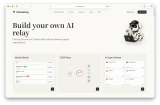
AICodeDog puts models from every major lab, Claude, GPT, Gemini and Grok, behind a single API and one bill, with routing, usage monitoring and OpenAI-compatible integrations. For developers it doubles as one key for coding assistants like Claude Code, Cursor and Windsurf, kept below the providers' own rates.
Good for: developers and teams who want unified access to several models without juggling keys, accounts and bills.
Quick facts: United States. A unified model API with relay and billing.
Shunya Labs
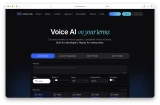
Shunya Labs builds the voice layer for AI: speech recognition, text to speech and speech intelligence in one platform, with custom models tuned for Indic languages and code-switched speech. It is built for real-time, high-stakes settings, fast enough to run inside a live call or an ambulance, where latency and accuracy both matter.
Good for: teams putting voice agents, transcription or speech translation into products that run in real time.
Quick facts: United States, with deep multilingual and Indic-language roots. Voice AI infrastructure across ASR, TTS and voice agents.


